


Data breaches are all but inevitable and occur in all types of organizations. Public entities are no exception, with cyber criminals increasingly targeting the wide-range of sensitive information they maintain (e.g., student data, resident data, confidential government infrastructure data, etc.).

Effective January 1, 2020, local agencies will be allowed to create their own public banks. Assembly Bill (AB) 857, known as California's Public Banking Act, allows local agencies and/or joint powers associations to organize nonprofit mutual benefit corporations for the purpose of engaging in the banking business.
A recent ruling of the Sixth District Court of Appeal found that a charter city, the City of San Jose, must abide by the California Surplus Land Act.
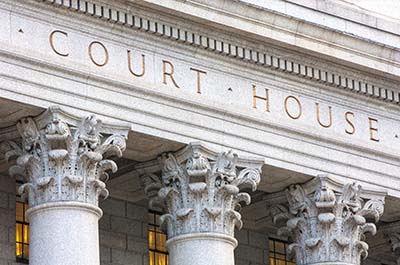
On December 9, 2019, the Appellate Court filed its decisions inLong Beach Unified School District v. Margaret Williams LLC, holding that an indemnity provision included in a consultant agreement between the parties was unfair and therefore inapplicable to claims brought by the consultant, Margaret Williams, or her consultant company, Margaret Williams LLC, against the District.

In a significant special education case published earlier this year, the California Court of Appeal ruled that a school district was responsible for funding the costs of residential placement for an adopted former foster child, despite funding assistance provided for the placement by the Department of Children and Family Services (DCFS).

Effective January 1, 2020, employees complaining of discrimination in the workplace will have three years to file a charge of discrimination with the California Department of Fair Employment and Housing (DFEH).
The risks involved in asking a court to halt the disclosure of documents sought under a California Public Records Act (CPRA) request were just expanded to public agencies. About a year ago, we reported that a pair of court decisions held that private parties who lose in a lawsuit, to prevent government agencies from disclosing personal information, may be required to pay the reques

While a new law ensures that community college districts may continue to utilize the design-build construction delivery method for another ten years, it also imposes additional labor requirements on all design-build projects.

California lawmakers recently proposed Assembly Bill (AB) 1184, which would have required public agencies to retain business related e-mails for at least two years. While the Governor did not sign the bill, this legislative effort again shows the significant interest in preserving e-mails as part of a public agency's public record.