

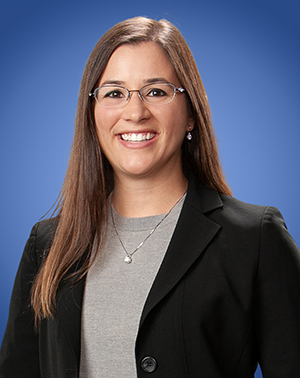
Gabriela D. Flowers
Partner | Sacramento
gflowers@lozanosmith.com
Tel: 916.329.7433
Fax: 916.329.9050
 Vcard
Vcard
 Bio
Bio
Overview
Gabriela D. Flowers is a Partner in Lozano Smith's Sacramento office and is co-chair of the firm's Labor and Employment Practice Group. Ms. Flowers also specializes in the Student and Litigation aspects of education law. Ms. Flowers routinely assists clients through both Certificated and Classified discipline and dismissal procedures, as well as defending unfair labor practice charges. Her Labor & Employment practice also includes grievance processing, contract interpretation, labor negotiations, employee leaves and responding to claims of discrimination filed with the DFEH, EEOC and DIR.Ms. Flowers supports administrators and boards with matters concerning conflicts of interest, the Brown Act and the Public Records Act. In addition, she gives presentations on a variety of topics, including conflicts of interest, Form 700, the Brown Act and Board Governance.
Additional Experience
Prior to joining Lozano Smith, Ms. Flowers worked as an attorney at a public entity law firm, where she gained experience in labor and employment issues facing school districts and county offices of education, including: employee discipline, collective bargaining, contract interpretation, grievance processing and unfair labor practices. Ms. Flowers also has experience in a variety of matters that affect the provision of public education, including: governance and litigation.Education
Ms. Flowers earned her J.D. from University of California at Davis in 2010 and was recognized as a Public Service Law Program scholar. She received her B.A. in English from Santa Clara University (cum laude) and her B.S. in Political Science with a minor in Philosophy from Santa Clara University (cum laude), both in 2007. Ms. Flowers has received certification through ATIXA as a participant in Level 1 and Level 3 ATIXA Civil Rights Investigator Trainings.Partially Overturning PERB, Court Holds that California State University Did Not Violate HEERA
March 9, 2026 Number 10California State University (CSU) prevailed in part against the California Public Employment Relations Board (PERB) on a negotiability issue under the Higher Education Employer-Employee Relations Act (HEERA) related to changes in CSU’s student vaccination requirements. In Trustees of California State University v. Public Employment Relations Board (Cal. Ct. App., Jan. 26, 2026, No. B340818) 2026 WL 194033, California’s Second District Court of Appeal a...
U.S. Supreme Court Lowers Threshold for Proving Harm in Title VII Employment Discrimination Cases
May 2024Number 21On April 17, 2024, the United States Supreme Court unanimously held, in Muldrow v. City of St. Louis, Missouri (2024) 601 U.S. __ [144 S.Ct. 967], that an aggrieved employee who was transferred to another position need only suffer “some harm” in an employment discrimination case brought under Title VII of the federal Civil Rights Act of 1964. The Court’s holding departs from prior legal precedent holding that to be actionable under Title VII, the employee ne...
School Board Prevails Against PERB in For-Cause Dismissal of Union President
IMPORTANT UPDATEOn April 24, 2024, in Visalia Unified School District v. Public Employment Relations Board (2024) 98 Cal.App.5th 844, 851, reh'g denied (Jan. 31, 2024), review denied (Apr. 24, 2024), the California Supreme Court denied both a Petition for Review filed by CSEA and a request for depublication, also filed by CSEA. The result of the denials affirms important legal precedent that a school board's finding of good cause to terminate a permanent classified school employee for poor p...
Congress Expands Federal Protections for Pregnant Workers
August 2023Number 33The United States Congress recently passed the Pregnant Workers Fairness Act (PWFA), a new federal law that requires covered employers to provide “reasonable accommodations” for a worker’s known limitations related to pregnancy, childbirth, or related medical conditions, unless the accommodation will cause the employer “undue hardship.” The PWFA, which applies to public and private employers with fifteen or more employees, became effecti...
Legislation Roundup: Pre-Hearing Adverse Actions Against Classified Employees, and Recovery of Wage Overpayments
January 2023Number 3New Limitations on Pre-Hearing Disciplinary Action Against Classified EmployeesOn September 30, 2022, Governor Newsom signed into law Assembly Bill (AB) AB 2413, limiting the ability of school districts and community college districts to immediately impose adverse actions against classified employees who request a hearing on their pending discipline.Effective January 1, 2023, Education Code sections 45113 and 88013 will prohibit a school or community college district from ...
Legislation Roundup: New Holidays, Extended Statute of Limitations for Mandatory Reporter Violations, and Health Benefits for Striking Employees
November 2022Number 52September was a busy month for Governor Newsom, who signed into law several bills which will have a significant impact on public employers. Included in the new legislation are bills creating new State holidays; extending the statute of limitations for prosecution of mandated reporters for failure to report child abuse or neglect; and requiring continued health benefits for striking public employees.HolidaysOn September 29, 2022, Governor Newson signed both Assembly...
New Law Prohibits Employers from Preventing Employee Disclosure of Alleged Workplace Discrimination and Harassment
February 2022Number 6Effective January 1, 2022, Senate Bill (SB) 331 makes it unlawful for employers to enter into agreements with employees in exchange for employees’ silence on information concerning claims or complaints of workplace discrimination or harassment, subject to certain exemptions.BackgroundSB 331 builds on SB 820 which was passed in 2018 and went into effect January 1, 2019, preventing employers from prohibiting employees from disclosing information about alleged sexual h...
AB 438 Overhauls Classified Layoff Procedures
October 2021Number 33On October 8, 2021, Governor Newsom signed Assembly Bill (AB) 438 into law. AB 438 modifies the Education Code’s classified layoff statutes by providing classified employees with the same notice and hearing rights afforded to certificated employees.Prior to AB 438, classified employees of school districts and community colleges districts could be laid off at any time during the school year if given at least 60 days’ advance notice. Further, classified employee...
Expiration of Expanded and Supplemental Leave under Federal Families First Coronavirus Response Act and AB 1867
February 2021Number 2FFCRA LeaveIn March of 2020, the Families First Coronavirus Response Act (FFCRA) was passed by Congress. The FFCRA provided, among other things, expanded Family and Medical Leave Act (FMLA) leave for child care, and also required employers to provide up to 80 hours of Emergency Paid Sick Leave (EPSL) to employees for COVID-19 related reasons. Our Client News Brief discussing leave provisions granted by the FFCRA can be found here: 2020 Client News Brief Number 17. The FFC...
The Effect of SB 820 on the Recording of Distance Learning
October 2020Number 70As school districts and county offices of education across California prepared to open their schools in a virtual distance learning format, electronic recording of remote instruction sessions became a topic of interest in labor negotiations. Existing law on the issue did not contemplate distance learning and the needs of students using a remote platform.On August 22, 2020, the Legislature released the August budget trailer bills, which made a number of major changes conce...
California Court of Appeal Upholds Certificated Dismissal for School Counselor's Facebook Comments
September 2020Number 66On August 11, 2020, California's Fourth District Court of Appeal upheld the dismissal of Patricia Crawford (Crawford), a certificated guidance counselor for the Jurupa Unified School District (District), on the grounds that her comments on a colleague's Facebook post concerning students were immoral and demonstrated she was unfit for service. Crawford v. Commission on Professional Competence (August 11, 2020, E071770) __ Cal.App.5th __) sheds much-needed light on a scho...
Layoffs Under SB 98
July 2020Number 55After much anticipation, following the Governor’s grim May Revise, Governor Newsom and the California Legislature reached an agreement for the 2020-21 California state budget. The final 2020-21 state budget and the enacting legislation, including the Education omnibus budget trailer bill (SB 98), reflect the profound impact COVID-19 has and continues to have on the economy and on state revenues. While cuts to K-12 public education were spared, under SB 98 various layof...
U.S. Supreme Court Holds that Title VII of the Civil Rights Act of 1964 Prohibits Workplace Discrimination Based on Gender Identity and Sexual Orientation
June 2020Number 50On June 15, 2020, the Supreme Court of the United States reached a landmark decision in Bostock v. Clayton County Georgia (2020) ___ U.S. __ [(U.S., June 15, 2020) 139 S.Ct. 1599] (Bostock) to extend protections against employment discrimination based on sexual orientation and gender identity under Title VII of the Civil Rights Act of 1964 (Title VII), which prohibits workplace discrimination because of race, sex, religion or national origin.Relevant FactsThe Supreme Court ...
Contracting COVID-19 While Working Could Make Employees Eligible for Workers' Compensation Benefits
May 2020 Number 45 On May 6, 2020, Governor Gavin Newsom signed Executive Order N-62-20, the latest in a series of Executive Orders expanding protections for workers during the ongoing COVID-19 pandemic. This order imposes a presumption that a California worker working outside their home who contracts COVID-19 has contracted the illness at work, making them eligible for workers' compensation benefits. The presumption remains in place from March 19, 2020, through July 5, 2020, and can be rebu...
Appellate Court Clarifies When School Employees are Eligible for Unemployment
May 2020Number 36In United Educators of San Francisco, AFT/CFT, AFL-CIO, NEA/CTA v. California Unemployment Ins. Appeals Bd. (“United Educators”), the Supreme Court of California clarified when and how educational employees might be eligible for unemployment insurance benefits during the summer break. When a school employee receives a reasonable assurance letter to work for the following school year, expects to work during summer school, but ultimately does not perform the expecte...
Federal Families First Coronavirus Response Act: Temporary Employer-Paid Sick Leave and Employer-Paid FMLA Leave for Childcare
March 2020Number 17In response to the nationwide economic disruption and uncertainty resulting from the COVID-19 outbreak, Congress passed, and the President signed, the "Families First Coronavirus Response Act" (H.R. 6201), which became law on March 18, 2020. While H.R. 6201 provides federal assistance in a range of areas, this Client News Brief focuses on relief provided by H.R. 6201 in the form of employer-paid sick leave for individuals and families unable to work due to the virus or its ...
Public Agency Employer Responses to COVID-19: Labor and Employment Implications
March 2020Number 12BackgroundWith growing concerns over the spread of the novel coronavirus, COVID-19, public agency employers are taking proactive steps to limit exposure and further transmission. The California Department of Public Health (CDPH) along with the Centers for Disease Control and Prevention (CDC) have been providing regular updates and recommendations for employers, which should be closely monitored and followed.The following is some general guidance from a labor and employment ...
Settlement Agreements To Resolve Employment Claims Filed By A Person Against Their Employer Can No Longer Contain No-Rehire Clauses
December 2019Number 83In the wake of the #MeToo movement, and as part of the ongoing legislative response to it, Governor Gavin Newsom signed Assembly Bill (AB) 749 into law, which prohibits no-rehire clauses in certain types of settlement and severance agreements. While the intent behind that law focused on victims of sexual harassment or sexual assault, the law is broad in scope and is not limited to such claims.AB 749 applies to any settlement agreement between an employer and an "aggrieve...
California Expands Definition Of Domestic Partners To Include Opposite Sex Couples
October 2019Number 63In California, registered domestic partners have "the same rights, protections, and benefits, and shall be subject to the same responsibilities, obligations, and duties under the law" as spouses. (Fam. Code § 297.5, subd. (a).) Existing law limits domestic partnerships, among other requirements, to two groups of individuals: (1) couples of the same sex or (2) couples of the opposite sex, one or both of whom are over the age of 62 and eligible for social security bene...
Final Rule Increases Minimum Salary Threshold For FLSA Overtime Exemptions
October 2019Number 59On September 24, 2019, the U.S. Department of Labor (DOL) announced its Final Rule, updating the minimum salary necessary for an executive, administrative or professional employee to be exempt from overtime pay requirements. Based on these revisions to the federal overtime rules, the DOL anticipates 1.3 million more employees will now be entitled to overtime pay.The DOL previously published updates to federal overtime regulations, effective December 1, 2016 (See 2016 Clie...
PERB Articulates Duties Of Employer When Faced With Internal Union Strife
October 2019Number 56In City of Arcadia (2019) PERB Dec. No. 2648-M, the Public Employment Relations Board (PERB) grappled with a variety of issues surrounding a public employer's duties in the face of warring factions within one of its unions, as well as the propriety of "exploding" offers-an offer or proposal that expires on a given date-in the context of labor negotiations.PERB held that the City unlawfully interfered with internal union affairs when its police chief encouraged a union rep...
Department Of Labor Opinion Says Family Medical Leave Allowed For Parental Attendance At IEP Meetings At School
October 2019Number 50On August 8, 2019, the U.S. Department of Labor issued an opinion letter (Opinion Letter) stating that the Family Medical Leave Act (FMLA) covers intermittent leave to attend a child's Individual Education Program (IEP) meeting, so long as the child suffers from a qualifying "serious health condition" under the FMLA. Special education IEP meetings are convened to develop, review, and revise the written document created and implemented to meet the educational needs of a ch...
New Law Clarifies Anti-Discrimination Laws Include Hair Discrimination
August 2019Number 38The California Legislature recently passed Senate Bill (SB) 188, known as the CROWN Act, which amends the definition of "race" contained in state anti-discrimination laws under both the Fair Employment and Housing Act and the Education Code to include "hair texture and protective hairstyles." The new law does not mean that public agencies have to change their dress codes unless specific hair texture and hairstyles are specified in their policy. Rather, the new law clarifie...
California Recognizes "Nonbinary" Gender Category And Requires Certain State Agencies To Collect Sexual Orientation And Gender Identity Data
April 2019Number 22The California Legislature recently passed legislation, taking effect in 2018 and 2019, making it easier for individuals to change their gender identity on official documents, adding a new gender identity option to certain forms of identification and vital records, and requiring certain state and local agencies to change data collection practices so that gender identity is more accurately accounted for in demographic data.Assembly Bill (AB) 677: Sexual Orientation and Gende...
Legislature Further Limits the Ability to Consider Expunged, Dismissed, or Sealed Convictions in Hiring Decisions
December 2018 Number 84 Senate Bill (SB) 1412, which takes effect on January 1, 2019, builds on prior law limiting consideration of expunged, dismissed, or sealed convictions in hiring decisions. SB 1412 prevents employers from requiring job applicants to disclose certain criminal convictions that have been expunged, dismissed, sealed, or statutorily eradicated. SB 1412 also provides that employers may only consider particular expunged convictions that are enumerated in the law when makin...
New Law Expands the Four-Year Evidentiary Window in Permanent Certificated Discipline Cases Involving Allegations of Sexual Misconduct
October 2018Number 62Assembly Bill (AB) 2128, effective January 1, 2019, will allow evidence and testimony outside the current four-year time window when a certificated employee is accused of sexual misconduct with a student or minor.Generally, Education Code section 44944 prohibits testimony, evidence, or a dismissal or suspension decision relating to matters that occurred more than four years before the date a permanent certificated employee is served with a notice of disciplinary action. W...
Legislature Enhances Minor Witness Protections in Employee Discipline Proceedings
October 2018Number 63Assembly Bill (AB) 2234, which becomes effective January 1, 2019, provides a comprehensive set of requirements for the presentation of testimony by minor witnesses at administrative disciplinary proceedings initiated under the egregious misconduct hearing process for permanent certificated employees, and for discipline hearings involving allegations of egregious misconduct for permanent classified employees of merit or non-merit system school districts. As a reminder, in ...
Lawmakers Okay Budget Bill Addressing Union Dues Collection and Communications about Membership Rights
June 2018Number 29California lawmakers have approved a budget trailer bill that imposes new obligations on public sector employers related to deducting union dues and fees from workers' paychecks. Governor Jerry Brown signed Senate Bill (SB) 866 on the same day the United States Supreme Court barred the collection of mandatory agency fees that cover unions' cost of providing services, which the Court deemed a violation of workers' First Amendment free speech rights. (See 2018 CNB No. 27.)The ...
Supreme Court Rules Public Sector Union Agency Fees Are Unlawful
This news brief is intended for public school districts, including community colleges. For the Janus news brief intended for municipalities and special districts, click here.June 2018Number 27Overturning a longstanding precedent, the United States Supreme Court has held in Janus v. AFSCME that public employees may not be compelled to pay mandatory agency fees, or "fair share" fees, to public-sector unions, because such fees violate the First Amendment.The Janus decision will have a sweeping, ...
When Politics and Walkouts Come to the Workplace: Considerations for Teachers, Superintendents, and Governing Boards
March 2018 Number 8 The February 14 mass shooting at Marjory Stoneman Douglas High School has inspired a groundswell of political activism at K-12 schools across the country. Lozano Smith previously reported on considerations and implications of student activism surrounding this issue. (See 2018 Client News Brief No. 7.) School districts must also consider if and how to regulate and respond to employee speech surrounding the gun control debate and other controversial topics. Additionally,...
Federal Court Holds Discrimination on the Basis of Sexual Orientation is Prohibited under Title VII
April 2017 Number 18 In Hively v. Ivy Tech Community College of Indiana (7th Cir., April 14, 2017, No. 15-1720) ___ F.3d ___ < http://media.ca7.uscourts.gov/cgi-bin/rssExec.pl?Submit =Display&Path=Y2017/ D04-04/C:15-1720:J:Wood:aut:T:fnOp:N:1942256:S:0>, a federal appeals court evaluated whether federal antidiscrimination laws protect an individual against discrimination on the basis of sexual orientation under Title VII (42 U.S.C. § 2000e-2(a)). In a landmark decision, t...
Labor and Employment Legislative Update, Part One
December 2016 Number 85 Governor Jerry Brown considered several bills this legislative season that impact the rights of public employees and their employers. In this first part of a two-part series, Lozano Smith examines four new laws with the greatest potential impact on public employers in 2017, plus two major bills the Governor vetoed. Assembly Bill (AB) 1918: County Offices of Education May Issue Temporary Certificates to Teachers Working in Nonpublic Schools while their Credential...
Employers Subject to New FEHA Regulations on Anti-Harassment Policies, Training, and Notice
May 2016 Number 30 Effective April 1, 2016, California employers are subject to new regulations under the California Fair Employment and Housing Act (FEHA), which prohibits workplace discrimination and harassment. The new regulations focus on changes in the following three areas: employer policies, training and dissemination of an employer's harassment, discrimination and retaliation prevention policy. Employer Anti-Discrimination/Anti-Harassment/Anti-Retaliation Policies All employ...
12 Weeks of Differential Pay Now Available for Certificated Employees on CFRA Maternity/Paternity Leave
October 2015 Number 56 On October 1, 2015, Governor Jerry Brown signed Assembly Bill (AB) 375, which creates a right to twelve weeks of differential pay for certificated employees who take maternity or paternity leave under the California Family Rights Act (CFRA). Until this bill, the CFRA only provided for an unpaid leave of absence for baby-bonding. Effective January 1, 2016, AB 375 adds Education Code section 44977.5 which establishes the right to differential leave for up to twelve week...
Employee's Inability to Work Under a Particular Supervisor is Not a Disability Under FEHA
August 2015 Number 43 The California Court of Appeal recently held that an employee's inability to work with her supervisor due to stress and anxiety did not qualify as a disability protected under the Fair Employment and Housing Act (FEHA). In 2010, Michaelin Higgins-Williams, a clinic assistant for Sutter Medical Foundation who had been diagnosed with adjustment disorder and anxiety, took an approved medical leave based on stress and anxiety caused by interactions with her manager. (...
Baccalaureate Degrees Soon to Be Available at Select California Community Colleges
October 2014 Number 75 In late September 2014, Governor Brown signed Senate Bill (SB) 850, granting California community colleges the authority to award certain baccalaureate degrees. This brings California in line with twenty-one other states. The new legislation will be found in Education Code sections 78040, et seq. Beginning January 1, 2015, the Board of Governors of the California Community Colleges may establish a pilot baccalaureate degree program at no more than 15 community co...
Employee's Immigration Status Does Not Bar Claims of Employment Discrimination, But Does Limit Recovery
July 2014 Number 37 In Salas v. Sierra Chemical Co. (June 26, 2014) __ Cal.4th __ 2014 WL 2883878, the California Supreme Court recently held that federal immigration law did not prevent unauthorized alien workers from bringing discrimination claims under the Fair Employment and Housing Act (FEHA) (Gov. Code, §§ 12940, et seq.), but did limit their ability to recover damages if they were unauthorized to work in the United States. In 2003, Vicente Salas applied for a job with ...
Ninth Circuit Affirms School Officials' Authority to Regulate Student Expression Where Disruption and Student Safety is at Issue, Even if Such Expression is the American Flag
March 2014 Number 15 On February 27, 2014, in Dariano v. Morgan Hill Unified School District (9th Cir. 2014) __ F.3d __ 2014 WL 768797, the U.S. Ninth Circuit Court of Appeals held that a school district administrator did not violate students' constitutional rights by requiring them to remove American flag clothing on Cinco de Mayo. The court's opinion primarily hinged upon: (1) the foreseeable threat of violence that day to the students wearing such apparel; and (2) the school's history ...
U.S. Supreme Court Reiterates the High Standard Universities Must Satisfy to Consider Race in Admissions Decisions
July 2013 Number 37 In Fisher v. University of Texas at Austin (June 24, 2013) __ U.S. __ 2013 WL 3155220, the United States Supreme Court reaffirmed that public higher education institutions may only consider race in admissions if the means of doing so is narrowly tailored to further a compelling state interest. The Court also clarified that a reviewing court may defer to a higher education institution's good faith determination that a diverse student body is essential to its educational...
Deference Given to Commission on Professional Competence Findings in Teacher Termination Case
May 2013 Number 25 A recent decision of the California Court of Appeal has reinforced the notion that a reviewing court is required to give a strong presumption of correctness to decisions by the Commission on Professional Competence (Commission) in certificated employee dismissal cases. This case is important for school districts because it provides useful guidance when considering whether to appeal a Commission's decision. In San Diego Unified School District v. Commission on Professional...